
From the moment we are born, our lives revolve around four essential needs: clothing, food, shelter, and transportation. Once basic needs like eating and dressing are met, people naturally seek comfort in living conditions—which brings us to housing. To build livable structures, construction materials are essential, and among them, bricks play a vital role. Producing quality bricks requires brick-making machines. There are many types of brick machines, which can be categorized as follows:
I. Classification by Raw Material
-
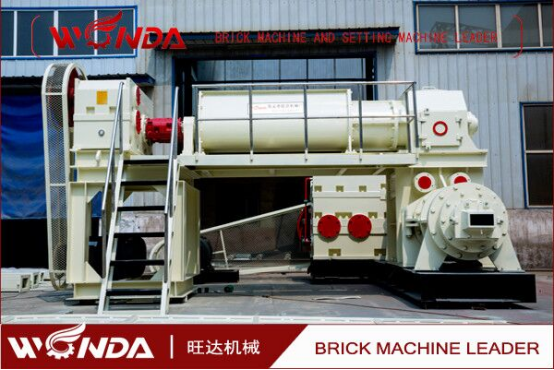
Clay Brick Machines
-
Raw Materials: Natural cohesive substances like clay and shale, which are easily accessible.
-
Process Features: Traditionally require high-temperature sintering (e.g., red bricks). Some modern models support non-fired clay bricks by mixing special binders or using high-pressure forming.
-
Applications: Traditional red bricks, sintered bricks, and non-fired clay bricks.
-
-
Concrete Brick Machines
-
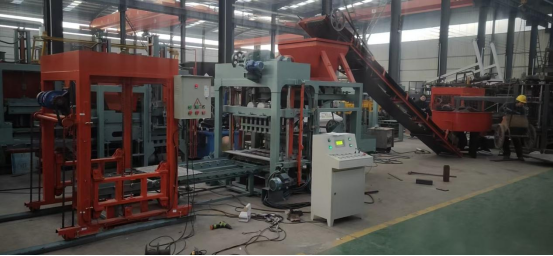
Raw Materials: Cement, sand, aggregate, water.
-
Process Features: Molded through vibration and compression, followed by natural or steam curing.
-
Applications: Cement bricks, curbstones, permeable pavers.
-
-
Eco-Friendly Brick Machines
-
Raw Materials: Fly ash, slag, construction waste, industrial by-products.
-
Process Features: Non-fired production using solidified waste, promoting energy efficiency and sustainability.
-
Applications: Eco-bricks, lightweight bricks, insulation bricks, foam bricks, aerated concrete blocks.
-
-
Gypsum Brick Machines
-
Raw Materials: Gypsum combined with fiber reinforcement.
-
Process Features: Fast setting and molding, ideal for lightweight partition walls.
-
Applications: Interior wall panels, decorative bricks.
-
II. Classification by Molding Method
-
Press Molding Brick Machines
-
Principle: Uses hydraulic or mechanical pressure to compress raw materials into shape.
-
Features: High brick density, ideal for sand-lime cement bricks and non-fired bricks.
-
Representative Models: Hydraulic static press brick machine, lever-type brick press.
-
-
Vibration Molding Brick Machines
-
Principle: High-frequency vibration compacts material within a mold.
-
Features: High production efficiency, suitable for hollow and perforated bricks.
-
Representative Models: Concrete vibration brick machine, block forming machine.
-
-
Extrusion Molding Brick Machines
-
Principle: Plastic raw materials are extruded into strips by a screw extruder and then cut into bricks.
-
Features: Suitable for clay and sintered bricks; requires subsequent drying and firing.
-
Representative Models: Vacuum extrusion brick machine (e.g., Wanda brand machines).
-
-
3D Printing Brick Machines
-
Principle: Digitally controlled, layer-by-layer deposition of material to form bricks.
-
Features: Customizable shapes; suitable for decorative or uniquely shaped bricks.
-
III. Classification by Product Type
-
Solid Brick Machines
-
Products: Solid bricks (e.g., standard red bricks, solid cement bricks).
-
Features: Simple structure, high compressive strength, but heavy.
-
-
Hollow Brick Machines
-
Products: Hollow and perforated bricks (15%–40% porosity).
-
Features: Lightweight, thermal and sound insulation, saves on materials.
-
-
Pavement Brick Machines
-
Products: Permeable bricks, curbstones, grass planting pavers.
-
Features: Replaceable molds, textured surfaces, wear-resistant and durable.
-
-
Decorative Brick Machines
-
Products: Cultural stone, antique-style bricks, colored bricks.
-
Features: Requires special molds or surface finishing techniques; high added value.
-
-
Special Brick Machines
-
Products: Refractory bricks, insulating bricks, aerated concrete blocks.
-
Features: Requires high-temperature firing or foaming processes; technically demanding equipment.
-
Summary
Construction is inseparable from bricks, and bricks rely on brick machines. Choosing the right brick machine depends on local conditions:
-
Market Positioning: For general-purpose bricks, vacuum extrusion machines are ideal—they offer high output, flexible raw materials, and broad market demand.
-
Production Scale: For personal use or small-scale manufacturing, vibration-based cement brick machines are more suitable. They require a lower investment, offer quick returns, and can even support family-based operations.
-
Raw Material Consideration: For operations that recycle industrial or construction waste—especially fly ash—aerated concrete brick machines are recommended. After sorting, construction debris can also be processed using vibration molding machines or mixed with clay for extrusion forming.
Post time: May-06-2025